What we do

We are passionate about crafting immersive XR experiences that are accurate, educational and effective. We participate in field research so that we can incorporate important cultural, historical and social elements from these historic and cultural sites into the development process. We rely on evidence-based instructional design theories and models to help shape the structure and content of the immersive experience.
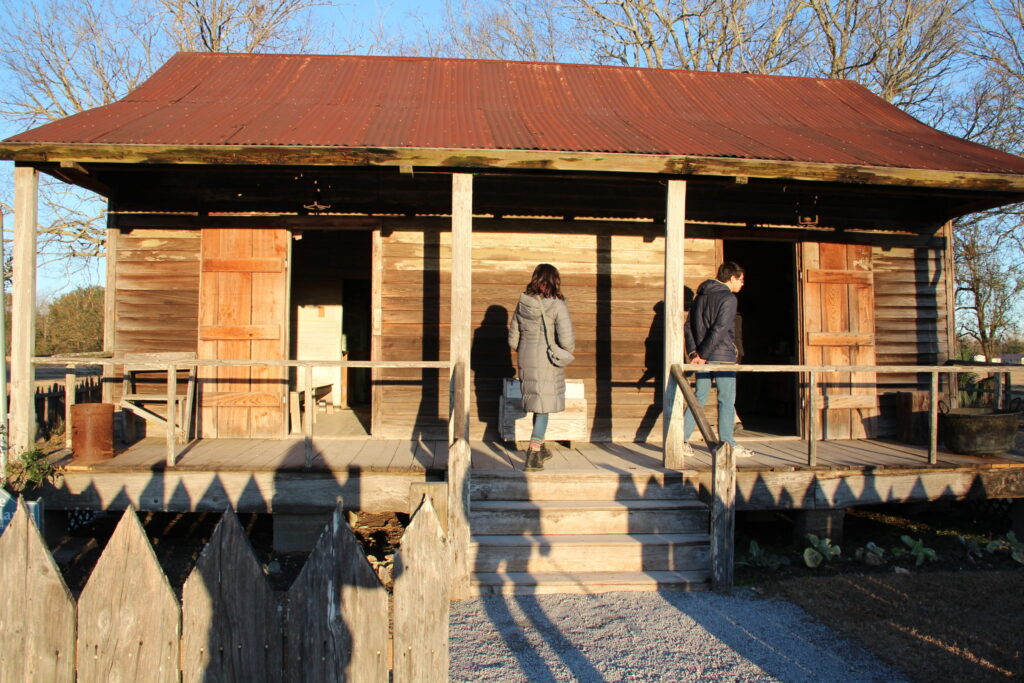
Field research. Members of the GCIEL student development team (from left to right: Sam Nakahira ('19) and Zachary Segall ('18)) conduct site-based research of a double-pen slave cabin at Laura Plantation in Vacherie, Louisiana (January 2018). Photo by David Neville.
Field research. Members of the GCIEL student development team (from left to right: Sam Nakahira (’19) and Zachary Segall (’18)) conduct site-based research of a double-pen slave cabin at Laura Plantation in Vacherie, Louisiana (January 2018). Photo by David Neville.

In designing and developing VR experiences, we employ team brainstorming and bodystorming sessions, activity diagramswhiteboxing, and Agile project frameworks to draft a design document and rapidly iterate toward a proof of concept (PoC) or minimum viable product (MVP) that can be referenced in external grant applications, research articles, and conference presentations. Hoping to benefit the greatest amount of people, we distribute all code, models and instructional materials as open educational resources.

Prototype testing. Zachary Segall ('18) tests a prototype VR experience with an unidentified Grinnell College computer science student. User testing allows GCIEL development teams to think critically about their own work. Photo by David Neville.
Prototype testing. Zachary Segall (’18) tests a prototype VR experience with an unidentified Grinnell College computer science student. User testing allows GCIEL development teams to think critically about their own work. Photo by David Neville.